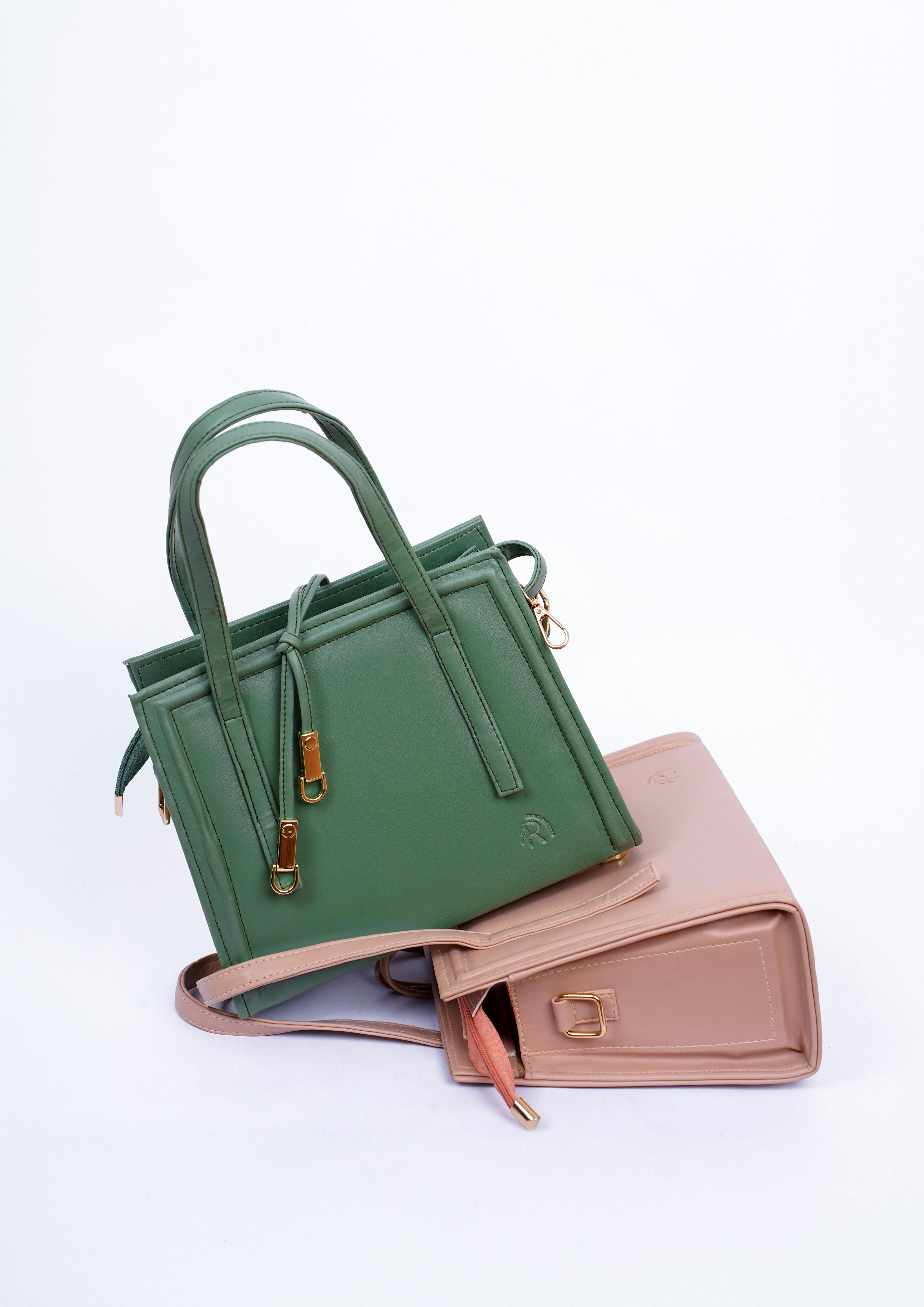
The Row Half Moon Bag: What to Know Before You Buy
Most people meet the Half Moon by accident. It shows up in a street-style frame, tucked under an arm, and nothing about it betrays the label. Nothing shouts: no plaque, no monogram, no hardware carrying across the pavement, which is the whole point of the row as a maker of handbags. Buyers then spend weeks deciding whether a crescent-shaped shoulder bag with no visible branding is worth what it asks. This guide answers that with specifics — observed 2026 market prices, published dimensions, construction you can check by hand, and documented resale behaviour. Nothing below constitutes an official price list, because the brand publishes none. Every figure below was observable in the market during 2026.
A Crescent Rather Than a Statement
The Half Moon takes its name from its outline, and the outline does all the identifying work. The body curves into a shallow arc that flattens against the ribs rather than swinging away, so it reads as part of the silhouette rather than an accessory hung onto it. The surface carries neither an exterior logo plaque nor a repeating monogram. Proportion, the run of the seams around the curve and a small discreet exterior stamp set low on the side where it blends in are what identify it. A second stamp sits inside. That restraint is the house language across every row bag, and this shape voices it clearly because so little else is going on. If you want a bag that tells strangers what it cost, this is the wrong purchase.
The Dimensions Question, Answered Straight
Most write-ups go wrong at exactly this point. Sources conflict on the published dimensions for the Half Moon, so presenting one measurement as settled exaggerates what is actually known. The figure with the most view collection authority behind it is the brand’s own: 8 x 13.5 x 2.5 inches. Read that shape carefully — the numbers describe the bag better than adjectives can. It is wider than it is tall and only two and a half inches deep, making it a flat, long, close-to-the-body carrier rather than a bucket. Phone, cardholder, keys and a compact fit; a hardback, a water bottle or a laptop sleeve do not. Treat any other quoted dimension as a range, and check the listing you are buying from.
Materials, Hardware and the Interior
The Row works across a defined material palette, and it explains most of the price variation on any row bag. Calfskin appears in smooth, matte grained, saddle and polished finishes; lambskin and nappa recur, nappa most often as lining; suede, canvas, nylon, sisal and raffia complete the range. The hardware is palladium-plated, matte or brushed instead of mirror-shined, and it ought to feel solid and close precisely and quietly. Linings are treated as materials in their own right rather than branding surfaces, so you find nappa, lambskin, calfskin and cotton herringbone inside instead of logo jacquard. The Half Moon is one of the models whose brand product page states Made in Italy. That matters, because origin is stated openly on some pages and not on others, which makes it checkable rather than presumed.
Why the Lining Is Not a Footnote
Buyers skim past lining descriptions, and with a bag this shallow that is a mistake. In a 2.5-inch-deep body the lining touches everything you carry, so its material governs how the interior ages far more than in a deep tote. Cotton herringbone wears differently from nappa — woven cotton forgives keys and coins, while nappa is exceptionally soft and marks easily. Neither is a fault; they simply require different habits. It also shapes resale presentation, because interior condition is one of the first things buyers inspect in listing photographs. Before committing, confirm which lining your variant carries, because the model comes in more than one construction.
What the Half Moon Cost in 2026
Observed 2026 market pricing puts the Half Moon at $1,390, which sets it in the entry tier rather than anywhere near the flagship end. A leather variant was observed separately at $1,690 at a stockist, meaning the model runs across more than one material and price. That spread is normal here — the same silhouette in a richer hide costs meaningfully more, a pattern you see across the line, where suede carries a consistent premium over calfskin. By way of perspective, the Soft Margaux 10 was observed at $3,650 and the Margaux Shoulder 12 at $4,900 over the same period. That puts the Half Moon at roughly a third of the flagship shoulder bag, carrying the same hardware finish and the same logo-free approach. These are observed market prices at a point in time, not a published tariff.
Its Place Among the Entry-Tier Bags
Judging the Half Moon works best against the pieces occupying its price band. Roughly $590 to $1,500 in observed 2026 pricing defines that entry tier of the row bags, and the shapes inside it are genuinely varied. There are pouches, structured totes and crossbodies among them, all solving different problems despite sitting within a few hundred dollars of each other. The table lays out the observed figures so the trade-offs are visible at once. In daily use the dividing line is capacity, not price. Read the right-hand column first if you are torn between them.
| Piece | Observed 2026 price | Bag format | Practical comment |
|---|---|---|---|
| Double Travel Wallet | $590 | Flat travel wallet | Documents and cards only |
| Boone Tote | $900 | Small tote bag | Lowest-priced tote in the tier |
| Cecily Mini Tote | $950 | Mini-format tote | Small and structured |
| Sally | $1,000 | Small-scale bag | Pared-back daily carry |
| 90’s Bag | $1,090 | Compact shoulder bag | The closest style rival |
| N/S Park Crossbody | $1,290 | Crossbody format | Hands-free carry |
| Half Moon | $1,390 | Curved shoulder bag | Flat 2.5 in depth |
| Idaho | $1,420 | Top-handle format | Structured counterpart |
Resale Behaviour, and What It Does Not Prove
The Half Moon has a documented secondary-market record, and it repays being read precisely. Rebag’s CLAIR 2025 report recorded the Half Moon shoulder at 106% value retention, meaning observed resale prices tracked slightly above original retail. The same report put The Row at 97% retention brand-wide, which pushed it into the unicorn tier of 85% and above for the first time, behind only Telfar, Hermes and Goyard. To give the scale: 146% for the N/S Park Tote and 107% for the Margaux Tote in the same report. Every bit of that is observed market behaviour, not investment advice, and none of it promises anything about the future. It also does not apply evenly: canvas, nylon, sisal and seasonal-colour pieces routinely discount on resale, with the appreciation story concentrated in black and neutral calfskin in the signature silhouettes.
Who Should Buy This Bag
The Half Moon suits a specific person and frustrates everyone else. Flatness, quietness and its price position within the range are the virtues. Its limitation is capacity, and that is structural rather than something clever packing will fix. If your day involves a laptop, a notebook or a lunch, you will have switched to something else within a week. Anyone seeking a logo-free shoulder bag that disappears into an outfit will find little else at this price doing the same job. The list below settles the decision quickly.
- Buy it if your daily carry is phone, cardholder and keys.
- Buy it if you want an entry point into row handbags and not the flagship outlay.
- Buy if a bag held close beats one that swings, for you.
- Move on if you need a work, travel or laptop-sized bag.
- Skip it if you want visible branding, because there is none.
Living With It: Care
No brand-issued care protocol exists publicly, so the sensible approach is material-appropriate general guidance rather than invented rules. Do not overfill the bag, which matters more here because a shallow body distorts quickly when stuffed. Keep it out of direct sunlight, heat and rain, and store it in its dust bag lightly stuffed so the crescent holds shape. Calfskin and grained finishes respond well to buffing with a soft dry cloth, and neutral conditioner should be used sparingly. Nappa and lambskin are softer and take marks easily, so stick to a dry cloth and resist over-conditioning. If your variant is suede, treat it as the most fragile: brush only, no cream, no wet wipes, no soap, and professional cleaning for real stains.
The Verdict
The Half Moon is the most accessible way into the house’s shoulder-bag thinking, and it is honest about what it is. What you pay for is silhouette, palladium hardware, an Italian-made construction and a lining treated as material rather than advertisement. You are not paying for capacity, and there is no point pretending otherwise when you try one. At an observed $1,390, and with a leather variant seen at $1,690, it undercuts the flagship models by thousands while holding the same design discipline. If you browse listings marked the row for sale, it turns up steadily on the major resale platforms, close to or a little above its original figure. Judge it on whether the crescent suits how you actually carry things.